
Local SEO for Beginners: Get Your Business Found Online
Local SEO is the #1 channel for local, service-based businesses to gain visibility online and reach new customers.
To get started with local SEO, claim and complete your Google Business Profile, build an SEO-optimized website, keep your business name, address, and phone number consistent everywhere, list your business on trusted local directories, and request customer reviews.
The following five steps will help your website get found across Google’s search features, including Maps, AI Overviews, and traditional search engine results page (SERP) listings.
Additionally, these local SEO best practices will also increase visibility and citations across major AI platforms, such as ChatGPT, Perplexity, Claude, Copilot, and more.
5X My Local Leads in 30 Days →
5 Local SEO Best Practices to Gain Online Visibility
| # | Best Practice | Actionable Details |
|---|---|---|
| 1 | Claim and Complete Google Business Profile | Complete all profile fields, including primary category, detailed services, business hours, service area, and description. Upload 5 high-resolution photos of your logo, building exterior, and past services you have completed. |
| 2 | Create an SEO-Optimized Website | Build a professional website with dedicated, location-specific and service-specific web pages (e.g., “Drain Cleaning in Scranton, PA”) to simplify user journeys and improve search engine indexation. |
| 3 | Build Trusted Directory Citations | List the business on authoritative platforms including Bing Places, Apple Business Connect, Yelp, BBB, Nextdoor, the local Chamber of Commerce, and industry directories. |
| 4 | Maintain NAP Consistency | Ensure exact consistency for Name, Address, and Phone number across your website, Google, Facebook, Bing, Apple Maps, and local directories. |
| 5 | Request Customer Reviews | Send automated text or email review links immediately after job completion. Respond to all positive and negative reviews within 48 hours. |
1. Claim and Complete Your Google Business Profile
Claim your free Google Business Profile using this link and fill out every available field, including:
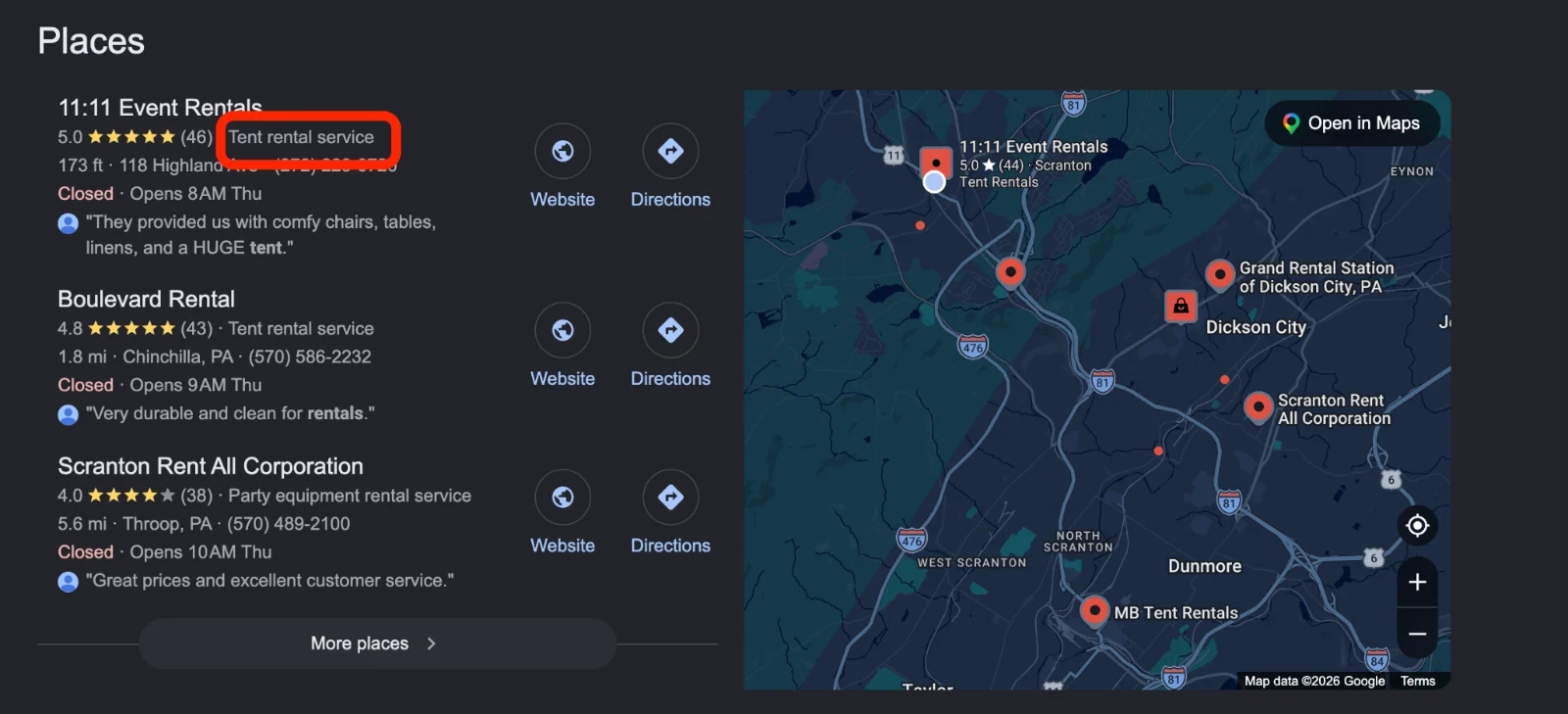
- Business Categories: Your primary business category directly influences what searches your business will rank and be categorized for. You can see the category directly underneath your business name in Map Pack results.
- Set Precise Operating Hours & Service Areas: Set your exact business hours, including holiday schedules, and fill in as many towns or counties within your precise service area for the widest reach.
- Craft an Optimized Description: Write a search-optimized business description incorporating local keywords and unique value propositions without keyword stuffing.
- Upload High-Resolution Media: Add at least 5 high-resolution photos showcasing your team, professional equipment, completed projects, and storefront or service vehicles to drive higher engagement.
- Itemize Service Offerings: List every specific service you provide with clear descriptions so search engines and prospective clients understand your complete scope of work. Use as many keyword varieties as possible to increase search visibility.
Enable Google Local Services Ads (LSA) and link them directly to your verified profile to obtain the “Google Guaranteed” badge for higher conversion rates.
5X My Local Leads in 30 Days →
2. Create an SEO-Optimized Website
Work with a qualified web designer to create a visually appealing website with a sound technical foundation.
Once everything is laid out, build out specific service pages with pricing, process information, and service areas to increase search visibility and conversions.
Next, build dedicated location pages for specific counties and cities/towns using a county > town parent/child relationship. This establishes a clear hierarchy for search crawlers and AI agents, helping your business rank for multiple locations at once.
3. Build Trusted Directory Citations
Submit and maintain consistent business profiles on high-authority platforms, including Bing Places, Apple Business Connect, Yelp, the Better Business Bureau (BBB), Nextdoor, local Chamber of Commerce directories, and niche industry associations.
Tools like BrightLocal and Moz can be used for bulk citation management, but we strongly recommend acquiring and paying for higher-quality local directories that search engines favor far more.
4. Maintain NAP Consistency
Ensure your business Name, Address, and Phone number are formatted identically across every digital touchpoint, including your website header/footer, Google Business Profile, social media pages, map services, and online directories.
Always update citations whenever moving or changing other important business information as this can mislead customers and create conflicts that impact rankings.
5. Request Customer Reviews
Request reviews within 48 hours of service and ask for customers to submit specific feedback and photos of your service.
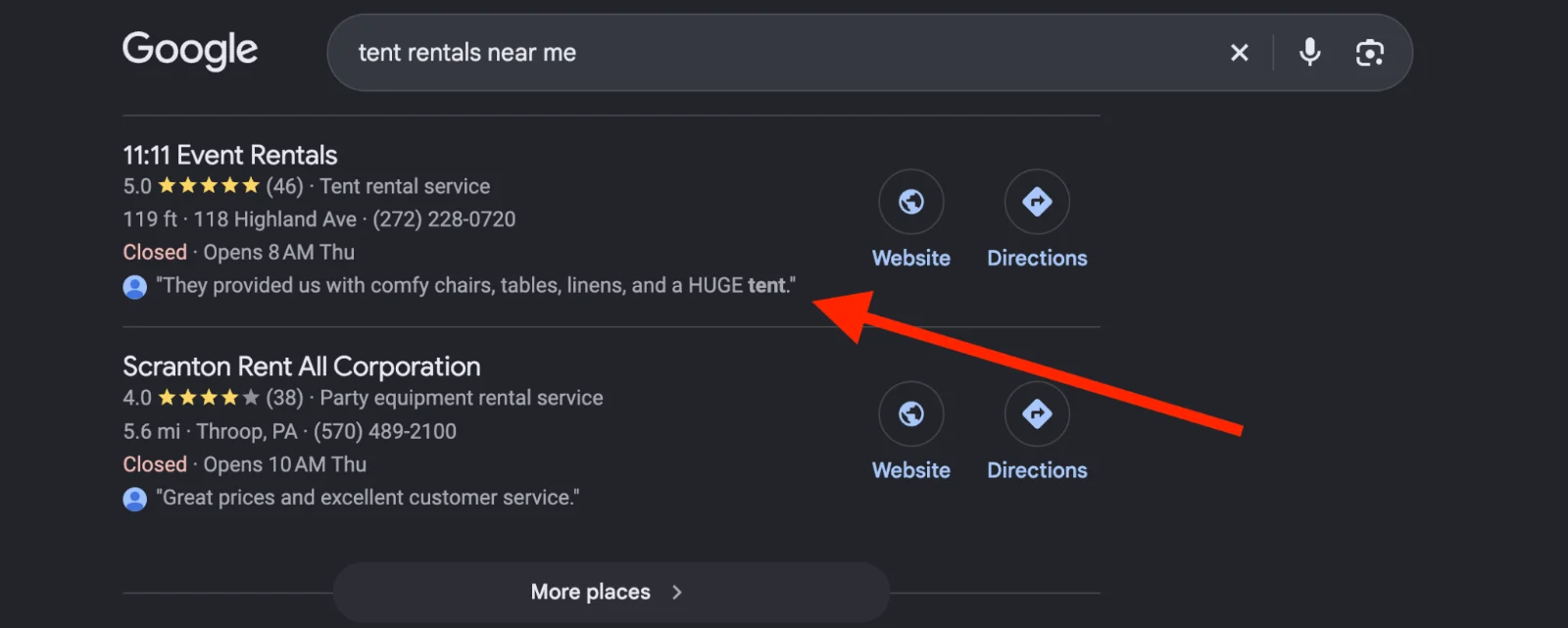
Search engines like Google often cite specific language from reviews directly in search results, which can impact visibility, rankings, and click-through rates.
If you handle hundreds of customers monthly or multiple locations, use an automated service like Birdeye or Podium to manage and respond to reviews.
5X My Local Leads in 30 Days →
What Is Local SEO?
Local SEO helps your business show up in search results whenever someone uses a search engine to inquire about local business services.
98% of US customers use online research before visiting a business and 97% of US customers read reviews before making a purchasing decision.
Local SEO focuses on customers in your immediate service area, helping you get discovered across multiple online platforms, including:
- The Google Map Pack: The map and top 3 businesses shown for local searches
- Local organic results: The regular listings just below the map
- AI answers: Google AI Overviews, ChatGPT, Perplexity, and other tools that recommend local businesses
How Long Does Local SEO Take to Work?
Most businesses see early results in 1 to 3 months and stronger, steadier rankings in 3 to 6 months. Competitive industries or larger cities can take 6 to 12 months.
| Timeframe | What You’ll Typically See |
|---|---|
| Weeks 1–4 | Your business starts displaying in local Map Pack results. Profile views and direction requests start climbing. |
| Months 1–3 | With proper optimization, steady calls start compounding as reviews and directory listings add up. |
| Months 3–6 | Service pages start ranking; traffic and leads become more consistent across digital platforms. |
| Months 6+ | Results begin compounding, allowing you to sit back and let leads come in. Continuous optimization guarantees sustained results long-term. |
Need Help Getting Found in Your Local Area?
Canopy Marketing Solutions helps local businesses get found on Google, Maps, and AI search. Hands-on help, no long-term contracts. Get in touch to see where your visibility stands today.
Local SEO FAQs
Is local SEO worth it for small businesses?
Yes. It’s one of the most cost-effective ways to reach customers who are already searching for your service in your area.
Can I do local SEO myself?
Yes, the basics are very doable on your own. Setting up your Google Business Profile, asking for reviews, and fixing your listings take a few hours. Ongoing content and technical work is where outside help pays off.
Do I need a website for local SEO?
You can appear in Google Maps with just a Business Profile or Facebook page, but a website makes it much easier to rank, convert visitors, and get recommended by AI tools.
What’s the difference between SEO and AEO?
SEO helps you rank in search results. AEO (answer engine optimization) helps your business get pulled into AI-generated answers. Clear, well-structured content helps with both.
